By Dr. James Peterson | WURD Radio
What if the whole universe were inside your refrigerator?
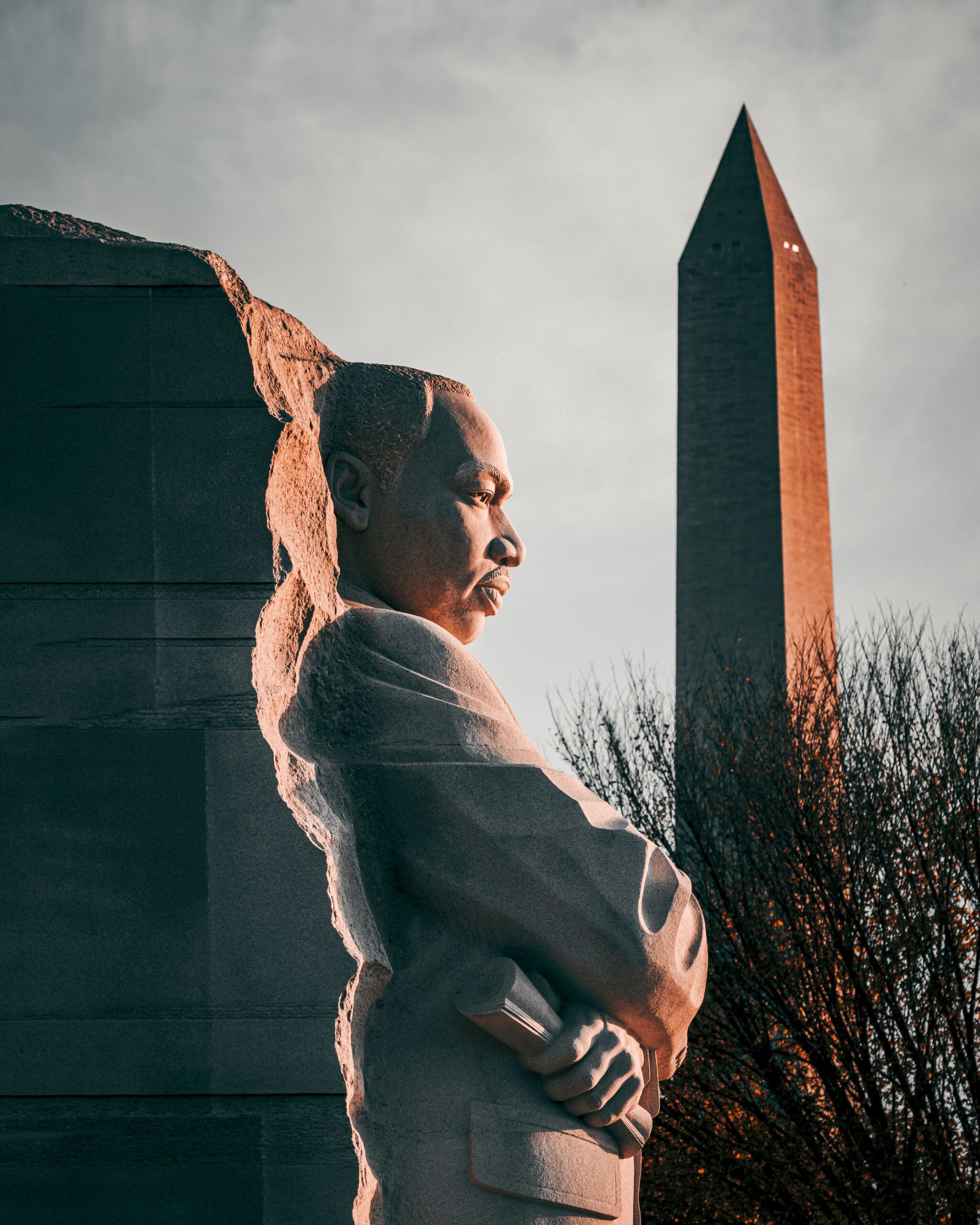
My daughter, an educator, tells a story about an after-school arts program where she was asked to help elementary school students reflect on the legacy of Martin Luther King Jr. Rather than beginning with speeches or dates, she invited the children to imagine King visually—to draw him, to shape him, to think about what he looked like and what he stood for.
One student raised a hand and asked a question as simple as it was profound:
“What kind of King was he?”
That question lands differently in 2026. We live in a moment when protests are criminalized, dissent is framed as disloyalty, and autocratic impulses dress themselves up as patriotism. So this question is worth asking again—especially on King’s birthday—what kind of King was he? He was not a monarch. He was not a fascist or tyrant. He was not a leader who governed by fear.
He was an American citizen. A Black man. A Baptist minister. A scholar. A husband and father. And, by any serious accounting, one of the greatest citizens this country has ever produced—someone who dedicated his life, his labor, and ultimately his blood to the unfinished project of American democracy.
As is often the case, the classroom, the inquisitive queries of students, and the imaginations of children are our best bets for a brighter future. Maybe the best answer to this question comes not from a historian or a monument, but from a short story penned by Charles Johnson, the National Book Award–winning writer whose fiction has always insisted on moral depth, philosophical rigor, and compassion. The story is called “Dr. King’s Refrigerator.”
In Johnson’s fictional meditation, we meet King before he is Dr. King—an ABD (all but dissertation) graduate student, newly married to Coretta Scott King, juggling the demands of doctoral research, sermon writing, and the ordinary pressures of young adulthood. He is exhausted. His mind is crowded with theology, ethics, nonviolence, and civic responsibility. Late one night, he wanders into the kitchen looking for a snack. He opens the refrigerator. And suddenly, he sees the world.
King begins to read labels—olives from one place, condiments from another, foods sourced from across borders and oceans. He pulls item after item out of the refrigerator and lines them up on the kitchen table. When Coretta walks in and asks, reasonably, what on earth he is doing, he explains that he has stumbled onto something astonishing: a revelation of global interdependence.
Even in the King’s modest mid-20th-century kitchen, the whole world is present. The refrigerator—an everyday object, regularly opened without ceremony—becomes a map of human connection. Economies intersect. Labor travels. Nations touch one another. Humanity circulates.
In Johnson’s telling, King does not yet know how to translate this insight into a sermon. But he knows it matters. It matters for his scholarship. It matters for his faith. And it matters for the moral future of the world he is trying to understand—and change. This fictional moment feels uncannily relevant today.
We are told, relentlessly, to embrace “America First” – not just from our federal government but even from some within the Black community. We are urged to narrow our vision, shrink our sympathies, and imagine that the United States can seal itself off from the rest of humanity while simultaneously exerting force across the globe. But Dr. King’s Refrigerator quietly dismantles that fantasy. There is no such thing as America first.
There is only interdependence.
Foreign policy, trade, migration, labor, climate, war—none of it makes sense without acknowledging that the refrigerator door we open every day already testifies to a shared global fate. Even the most ordinary aspects of American life are shaped by people, places, and systems far beyond our borders. Our comforts are global. Our crises are global. Our responsibilities are global. For Black folks, our history is global – it is shared.
And this is where Johnson’s story becomes not just literary, but ethical.
“Dr. King’s Refrigerator” teaches what authoritarianism denies: that our lives are bound up with one another. That no nation survives by pretending otherwise. That the antidote to fascism, billionaire autocracy, and empire is not isolation, but moral imagination—an imagination capacious enough to recognize human connection where others insist on division.
That, finally, is what kind of King Martin Luther King Jr. was. He was not a king who ruled over others. He was a king who reveled in human relationships, A king who understood that justice requires an insistent interdependence global in scope and grand in its commitment to human inclusivity. King was a king who could open a refrigerator and see the world—and then ask us to love it anyway.
On this MLK Day, in the shadow of the nation’s 250th anniversary, we do not need pageantry as much as we need perspective. We do not need slogans as much as we need humility. And we do not need to pretend that democracy is secure when it so clearly is not. What we need is the wisdom of this Refrigerator King: the courage to see interconnection in the ordinary, humanity in the mundane, and moral obligation in the everyday choices we make.
The universe is already in front of us. We open the door and access it every day. But the reality is, we can only realize it when we realize the interconnectivity of humanity itself.