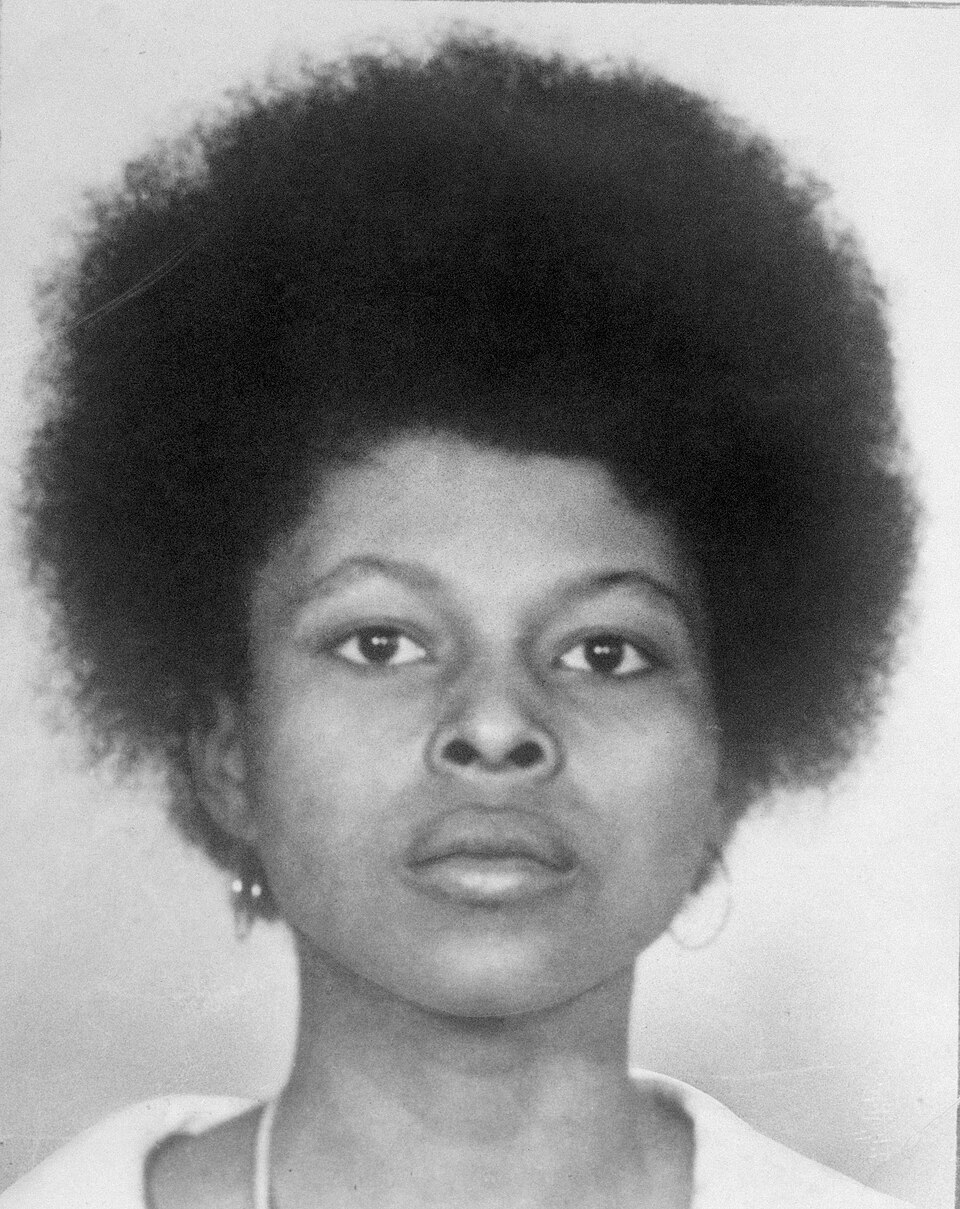
By Dr. James Peterson | WURD Radio
Traditionally, when Black legends transcend—artists, educators, entertainers, and especially revolutionaries—we say, Rest in Power. With the transcendence of Assata Shakur, this phrase becomes not only a farewell but a charge. It is a discursive summoning of spirit, a reminder of the weight carried by those who dared to love Black people enough to resist.
Assata’s story is singular in the history of Black resistance in the United States. Her life defies the limits of fiction—it is too complex, too painful, too miraculous to be anything but real. Born Joanne Deborah Chesimard in Jamaica, Queens, in 1947, she became Assata Shakur through struggle, transformation, and a radical clarity about the conditions of Black life in America. Her life story, chronicled in Assata: An Autobiography, charts this journey, not as spectacle but as testimony—an account of political education, collective organizing, and the high costs of resistance.
In her autobiographical narrative, a text that embraces the structure of narratives written by enslaved Africans in the 18th and 19th centuries, Assata writes:
“I am convinced that a systematic program for political education, ranging from the simplest to the highest level, is imperative for any successful organization or movement for Black liberation in this country.”
As a central figure in both the Black Panther Party and the Black Liberation Army, Assata embodied a revolutionary commitment to Black liberation through community organizing, self-defense, and education. Like Malcolm X—whose speech “The Ballot or the Bullet” she internalized and expanded—Assata believed in political literacy as a necessary tool of emancipation. She didn’t just preach it. She lived it.
And for that, she paid dearly.
Assata Shakur was targeted by the FBI, by the Department of Justice, by the State of New Jersey. She was surveilled, harassed, shot, arrested, tried multiple times, acquitted of most charges, and ultimately convicted of being an accomplice in the killing of a New Jersey State Trooper during a 1973 shootout on the New Jersey Turnpike. Forensic evidence, later analysis, and witness statements suggest she did not fire a weapon. What we do know—what is irrefutable—is that she was shot, unarmed, with her hands raised. That she was the only woman in U.S. history incarcerated in an all-male prison. That she was tortured while in custody.
What followed is legend, but legend rooted in truth: Assata escaped. She was liberated from prison in 1979 and eventually made her way to Cuba, where she was granted political asylum and lived in exile for more than four decades.
The United States government never forgave her. In 2013, under President Barack Obama—the nation’s first Black president—the bounty on her capture was raised to $2 million. She was a fixture on the FBI’s Most Wanted list. That gesture alone reflects the enduring threat that Assata posed to American empire: a Black woman who had outmaneuvered the state, lived to tell the tale, and never apologized for her resistance.
Assata’s revolutionary commitments did not end in exile. She became a global advocate for justice, embracing socialism as the political and economic framework most capable of delivering equity across race, class, and gender. Though socialism remains a dirty word in mainstream American discourse, Assata’s alignment with it challenges us to imagine alternatives to the rapacious capitalism that shapes our current political order.
To say that Assata was a hero to Black people is an understatement. For many, she was a deity of resistance, a symbol of uncompromising love for her people. But beyond the myth, she was a person—a woman, a mother, a survivor—who reminded us of what it means to live a life committed to liberation.
And she created critical and revolutionary roots, right here in Philadelphia.
There were rumors, now proven false, that after the turnpike shootout, she had briefly hidden out in this city. That wasn’t true. But she did attend the 1970 Black Panther Party Constitutional Convention held in Philadelphia. In her Autobiography, she writes about the energy, the urgency, and the clarity of purpose that suffused that gathering. That same spirit animated the MOVE organization, which also drew the full force of state violence in the years that followed.
Assata knew then what we are reminded of now: that Black resistance in America is often met with state repression. That the full power of law enforcement—local, state, federal—can and will be turned against communities that dare to organize for freedom. As we mourn her passing, we cannot ignore the broader moment we are living in. The head of the FBI may tell us not to mourn her. But his warning only confirms her importance.
Assata’s life is a window into the enduring machinery of American repression—and a mirror reflecting the possibility of Black freedom. She was hunted, vilified, and exiled. And still, she spoke. Still, she loved. Still, she fought.
Her death is not the end of her power. Her rest is not a retreat. If anything, Assata’s transcendence places her in eternal communion with the ancestors—the long line of revolutionary spirits who have charted a path toward justice, even in the face of overwhelming odds. Sojourner – Harriet – Ida – Josephine – Fanny – Shirley. ASSATA.
She concludes her indelible autobiography with a poem called “The Tradition,” the final stanzas of which read as follows:
“We carried it on. / Through the lies and the sell-outs, / The mistakes and the madness. / Through the pain and hunger and frustration, / We carried it on. / Carried on the tradition. / Carried a strong tradition. / Carried a proud tradition. / Carries a Black tradition. / Carry it on. / Pass it down to the children. / Pass it down. / Carry it on. / Carry it on now. / Carry it on / TO FREEDOM!
Assata Shakur is alive in our revolutionary aspirations – our indefatigable desire for liberation and the sovereignty of our self-determination. She – Assata – rests in power. May she rise in purpose. Hers is our tradition.
*Header Image – This work is in the public domain in the United States because it was published in the United States between 1930 and 1977, inclusive, without a copyright notice.